


Hill Farm Dairy Goat farm and cheese factory

Designscape was commissioned to design a barn and dairy production facility for a new cheese making company. The design aims to reflect both the ethos of the client company and the site: a quality handmade product, using natural materials and low energy solutions, created with respect for its surroundings. Despite their size the buildings do not dominate, as they take advantage of the natural topography and step down the hill, enabling the barn and the milking parlour to sit above the dairy. The cold storage and maturing areas are pushed back into the hillside under the parlour. The result is a low impact design that naturally enhances the cheese making process, as the milk can flow by gravity from parlour to dairy, avoiding pumping and thus preserving the quality of the milk. Named by a leading French expert as one of the top 5 cheese making facilities in the world, Designscape had never previously designed a dairy.
Twinneys A new sustainable home in the Greenbelt

This award winning new house is built on the site of a former piggery and lies within the Bath & Bristol Green Belt in an Area of Outstanding Natural Beauty. The design is conceived as a low-lying timber and glass structure supported on a terraced landscape, to blur the boundary between building and terrain. Sleeping accommodation is situated on the lower ground floor of the house with the entrance and open-plan kitchen, dining and lounge spaces above. Three terraces open out from the living areas affording panoramic views across the valley. The thermal mass and high performance of the building envelope is complemented by solar hot water panels to provide a low energy solution. A partially autonomous artist’s studio and gallery is built into the hillside to the rear.
Avenue Housing A back land development of 5 low cost homes

This development proposal responds to the need for small, low cost houses and flats in Minehead, whose economy is heavily dependent on seasonal work and retired people. Situated in the main street connecting the town centre to the beach, the scheme comprises the conversion of a Victorian former hotel and nursing home into seven private flats, some with private gardens, suitable for young or elderly couples. The former car park at the rear is to be developed as five small mews houses around a small parking yard, providing accommodation fitting for young families. The arrangement of shared facilities and common external circulation routes has been designed to encourage neighbours to meet and to get to know each other.
Court Farm Barn A Listed Barn Conversion

Situated adjacent to the Farm House, the Grade II* listed former threshing barn had fallen into a state of disrepair and the proposal was developed to repair and convert the structure to provide ancillary accommodation to the main house, to include a home-work space, kitchen, bathroom and guest bedrooms. The new functions are contained within a series of free standing white timber boxes to the west end, leaving two- thirds of the original double-height volume intact. The existing modern steel frame is utilized to support the new roof structure without distributing the extra load onto the historic walls. As part of the first phase of works, a new wood-burning boiler in an adjacent outbuilding provides heating and hot water to both the farm house and converted barn.
Bloomfield Avenue A modern garden room kitchen extension

Our brief in developing designs for this project was to replace a small galley kitchen, dark breakfast room, tired utility room and underused conservatory. The end result needed to be light and bright, provide a direct and open relationship between the house and garden, with enough space to function as a multi-purpose room where the family would spend much of their time together. Our proposal created a new open plan space which stretched across the back of the house containing kitchen and family room. We moved the family spaces closer to the garden and the light and utility room into the house where natural light was less important. Large areas of glazing bring high levels of natural daylight into the house. A full width sliding door and floor to ceiling window system blurs the boundary between inside and outside, bringing the garden into the house and making the garden more accessible and usable.
Cedar House A remodelled and extended home in a Conservation Area

The client had purchased a dilapidated 1950s house in a residential street in Bristol, and wanted to transform it into a modern, bright and low energy family home. After discussions about the merits of retaining all, part or none of the existing accommodation, it was decided to leave the front part of the house in tact with a new extension to the rear. The retained section was renovated and included a new slate roof, metal windows and was overclad with insulating render to improve the thermal performance. The rear of the house took on a softer character using western red cedar cladding and contained the new heart of the house; a double height dining space with direct access into the kitchen and a new staircase leading to a first floor gallery.
Briefing document

From residential homes and commercial housing schemes, to art galleries, offices, agricultural and high-tech manufacturing buildings, we have extensive experience of designing architectural solutions for all environments
Residential Architecture

Designscape are experts in buildings designed for living. From interesting new builds to schemes that bring new life and identity to historic and listed buildings. View a collection of our principal residential products.
Cornbury Mill Modern refurbishment of historic watermill

Described as “a picture book C18th mill house set in beautiful mature gardens”, the project to refurbish an old watermill near Devizes turned out to be very challenging. Designscape were appointed to convert the mill for use as a calming weekend retreat. The building had previously undergone many changes and was dark and damp, suffering from low ceilings and made up of many small rooms. Surprisingly perhaps it is not listed and the alterations did not require planning permission.
Our approach was to undertake a sympathetic renovation, stripping back recent alterations and opening up the floorplan to let in more daylight. This simple architectural intervention transformed the interior by providing a light and airy open plan living space, aided by the use of light finishes throughout. Major challenges were overcome during construction including a high water table, significant roof structure repairs, and the reconstruction of a substantial masonry chimney breast. These were addressed in a collaborative fashion by the design team and contractor, assisted by the clients’ understanding approach and trust in their professional advisors. The house is transformed on the inside but little altered externally. It remains a gem and as charming as it always was, but now the interiors are clean, warm, light and a joy to be in.
Neros Foundation Indonesian Health Clinic
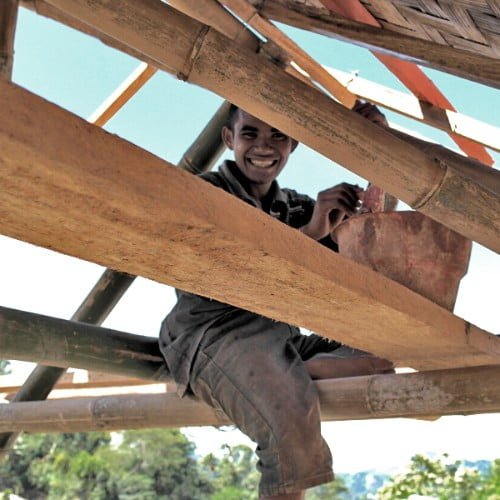
We are proud to support the Neros Foundation through our links to one of the trustees, Cara Sykes. The Neros Foundation is a charity working to relieve poverty affecting the inhabitants of the island of Flores, Indonesia, by providing basic yet vital infrastructure. It was set up after the trustees realised how much impact relatively small amounts of money could have in Flores. The practice has given financial assistance enabling the charity to build toilet facilities for schools but more recently we offered an internship to architectural student, Sophie Greene to develop a sustainable design solution for a new medical outreach centre to serve the local population. Both Sophie and architectural assistant Kelia Espinosa travelled to Indonesia in the summer of 2012 to view and assist progress on site.
We produced a report on sustainable construction.