


Cedar House A remodelled and extended home in a Conservation Area

The client had purchased a dilapidated 1950s house in a residential street in Bristol, and wanted to transform it into a modern, bright and low energy family home. After discussions about the merits of retaining all, part or none of the existing accommodation, it was decided to leave the front part of the house in tact with a new extension to the rear. The retained section was renovated and included a new slate roof, metal windows and was overclad with insulating render to improve the thermal performance. The rear of the house took on a softer character using western red cedar cladding and contained the new heart of the house; a double height dining space with direct access into the kitchen and a new staircase leading to a first floor gallery.
Briefing document

From residential homes and commercial housing schemes, to art galleries, offices, agricultural and high-tech manufacturing buildings, we have extensive experience of designing architectural solutions for all environments
Cornbury Mill Modern refurbishment of historic watermill

Described as “a picture book C18th mill house set in beautiful mature gardens”, the project to refurbish an old watermill near Devizes turned out to be very challenging. Designscape were appointed to convert the mill for use as a calming weekend retreat. The building had previously undergone many changes and was dark and damp, suffering from low ceilings and made up of many small rooms. Surprisingly perhaps it is not listed and the alterations did not require planning permission.
Our approach was to undertake a sympathetic renovation, stripping back recent alterations and opening up the floorplan to let in more daylight. This simple architectural intervention transformed the interior by providing a light and airy open plan living space, aided by the use of light finishes throughout. Major challenges were overcome during construction including a high water table, significant roof structure repairs, and the reconstruction of a substantial masonry chimney breast. These were addressed in a collaborative fashion by the design team and contractor, assisted by the clients’ understanding approach and trust in their professional advisors. The house is transformed on the inside but little altered externally. It remains a gem and as charming as it always was, but now the interiors are clean, warm, light and a joy to be in.
Neros Foundation Indonesian Health Clinic
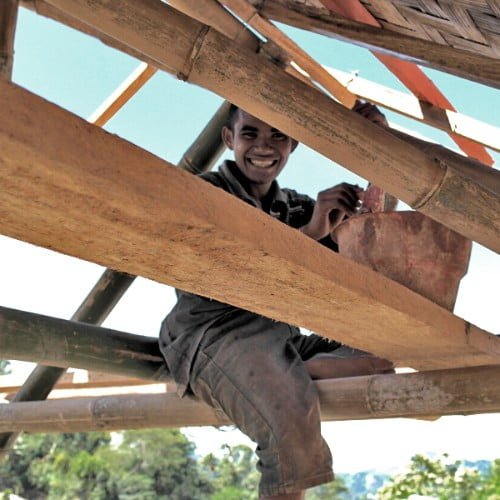
We are proud to support the Neros Foundation through our links to one of the trustees, Cara Sykes. The Neros Foundation is a charity working to relieve poverty affecting the inhabitants of the island of Flores, Indonesia, by providing basic yet vital infrastructure. It was set up after the trustees realised how much impact relatively small amounts of money could have in Flores. The practice has given financial assistance enabling the charity to build toilet facilities for schools but more recently we offered an internship to architectural student, Sophie Greene to develop a sustainable design solution for a new medical outreach centre to serve the local population. Both Sophie and architectural assistant Kelia Espinosa travelled to Indonesia in the summer of 2012 to view and assist progress on site.
We produced a report on sustainable construction.
Sydney Buildings Modern extension of a listed house

Sydney Buildings is a desirable street on the southern slopes of central Bath. Our client purchased a run-down listed property previously used as student accommodation with the aspiration to return it back into a family home. After careful analysis of the historic value of various aspects of the building fabric, we prepared a scheme that stripped away the modern layers of inappropriate interventions, repaired original features and sensitively introduced new services to make the house fit for modern life. The highlight is the new contemporary double-height bay window in the basement that opens out into the garden providing views across the Kennet and Avon Canal to the city skyline beyond.
Monkton Farleigh Timber framed extension to Listed Cottage

The project involved the refurbishment and extension of a grade II listed cottage in the picturesque village of Monkton Farleigh (Green Belt and AONB). One of a row of two, formally three cottages, the building had been extensively remodelled and was badly in need of modernisation. Challenges included a flying freehold over the neighbouring cottage. Designscape were appointed as having the knowledge and experience best suited to the owner’s needs and objectives. The brief was to undertake a sympathetic renovation of the house, strip out modern alterations, make minor modifications to the layout, upgrade building services, and where feasible, upgrade the building fabric. The attic became a main bedroom suite and a poorly constructed C20th extension replaced with a new design built to a high standard and making the most of the garden and views across the fields beyond. The result is a series of high quality, light, airy, warm and healthy living spaces which retain and enhance much of the old character, whilst adding a new layer which will age sympathetically with the dwelling. The project stands out in achieving a successful marriage of thoughtful design, an understanding client, and some conscientious workmanship from the builder which in our experience is a rare commodity in projects of this scale and complexity.
Hillcrest A new community of six houses
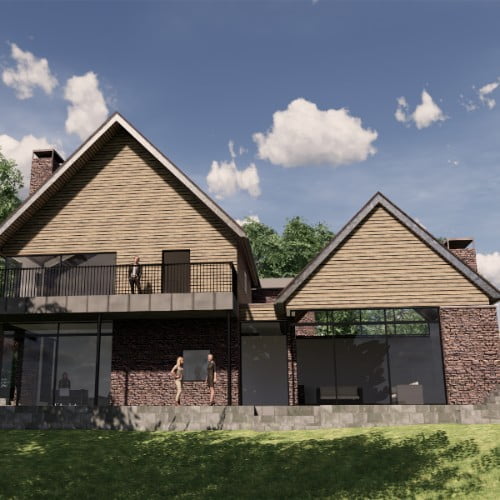
A new community in a woodland setting.
This project for six new houses is located upon a hill north of Bristol within the village of Winterbourne Down. The wooded site previously formed the garden of a large derelict house and contained a disused quarry. The houses are arranged around a central ‘clearing’. Constructed with rubble stone and timber clad walls the houses are designed to reflect the character of the site and nearby listed church. The houses are positioned around protected trees and to maximise views from the elevated site. Four of the houses are substantial homes with 5 or more bedrooms and double garages. One has an outdoor swimming pool. The two remaining are designated affordable homes.
Hawker’s Meadow Sustainable community for active retired living
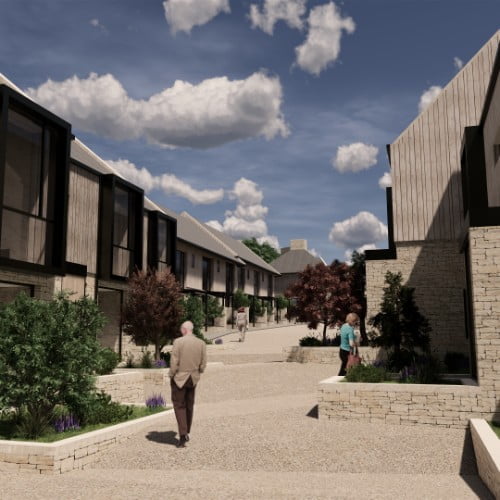
Located on the edge of the village of Batheaston, this project for 20 houses, 10 apartments and clubhouse facilities is for a new model community for the active and retired. Arranged around a common pedestrian ‘yard’ the residents enjoy common facilities including gym, bar, library, function space and a wildlife water meadow with the wider community. Parking is provided in a basement car park. The buildings are designed to respond to the local agricultural tradition, maintain a modern appearance and provide connected digital facilities for residents within the highly insulated and energy efficient homes.
Holcombe mill New workspace within converted mill

Holcombe Mill is a Grade 2 listed structure on an industrial estate in the Nailsworth valley, near Stroud. Working in collaboration with the local conservation officer, the Mill has been rescued from near dereliction and converted into flexible serviced office space for one or multiple occupiers. The new architectural interventions including a corten metal entrance canopy, metal staircase and services are designed to be of high quality and sympathetic to the industrial context and origins of the mill building, yet remain clearly legible as modern. Natural ventilation, and high levels of natural daylighting combined with the historic features of the original building provide a pleasant working environment for the tenants of the building.
Planning Consent & Bat Surveys

Notorious for adding months of delay to a planning application, mitigating the presence of bats can help keep your building project on track.