Green Halo Housing
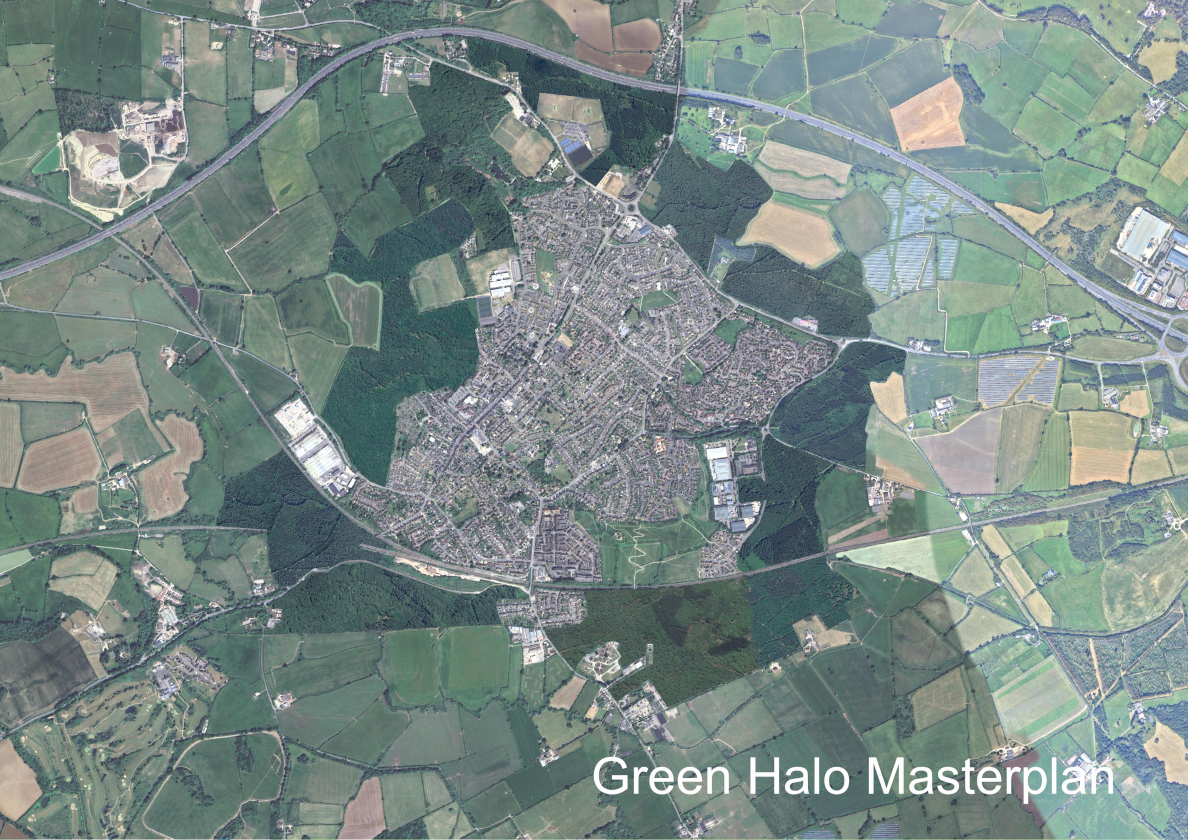
Working with our long term Client Sustain Wiltshire (Community Interest Company) , we have been developing a radical new approach to tackling the local housing need around Royal Wootton Bassett.
The existing model is a Mess and doesn’t work at any level
Local Authorities are currently all engaged in a scramble to allocate new land for housing. The Government seems only to be interested in the number of units and pays lip service only to the quality. This approach relies heavily on the traditional model of the big housebuilders banking and controlling land and building identikit housing estates at a rate which is driven by the availability of money to buyers. It is supposed to be a way of delivering housing, relying on the private sector, without it costing the government money that it doesn’t have. But this model isn’t working any more as construction costs are outstripping money supply and successive governments have ended up having to underwrite first time buyer mortgages with lower deposits to buy new houses.
There is a severe lack of affordable public housing which has driven up private rents and those who are not homeowners will not be able to afford the rent when they retire. They will either be on the streets or the Government will have to pick up the tab by way of housing benefit – arguably money that would have been far better spent building affordable public housing.
The Vision
Royal Wootton Bassett (RWB) currently has a housing need of 1230 homes by 2038* . Sustain’s vision is to rethink housing and transport in a way that can support the housing need and create genuinely sustainable and affordable local housing.
The proposal involves a radical rethink of future housing provision for the local community and attempts to break the cycle of spiralling housing cost and the link between housing and increased private car usage by opening up land for development that would not be available under the traditional approach:
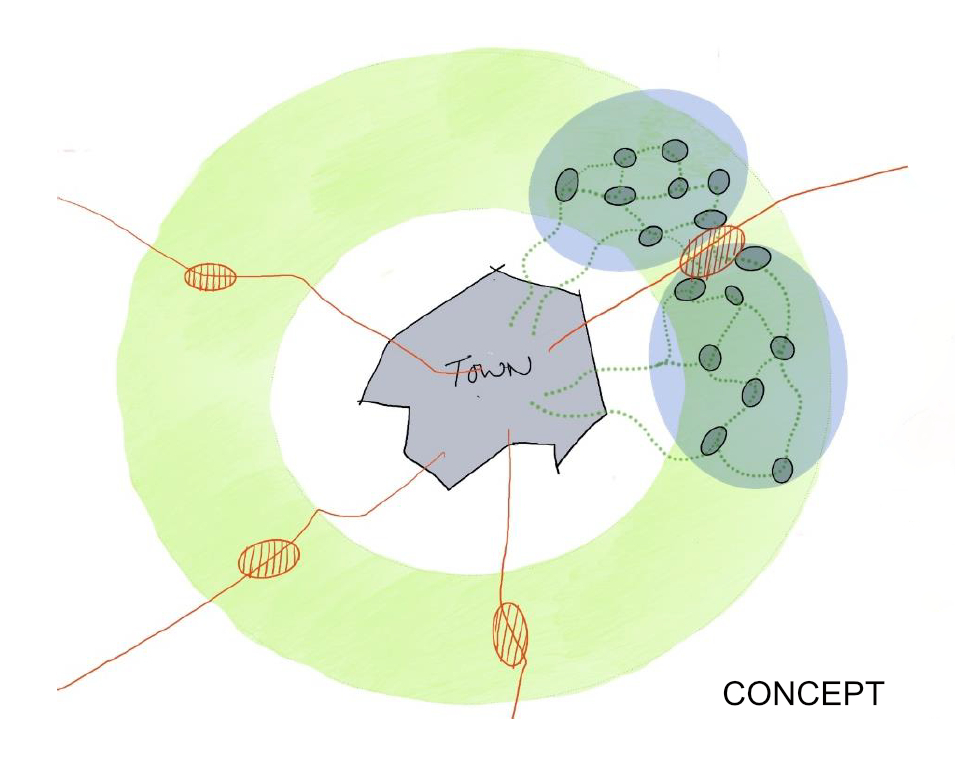
Land which would not be allocated for housing in the Local Plan ( which would immediately inflate the price of the land) would be leased from landowners by the Sustain CIC. Farmers would benefit from a long term income at least equivalent to farming, but without the hard work and risks of farming. This land would then be made available for low cost (long term, secure tenure) rent only. With land costs and developer profits no longer pushing up the price of houses, the houses will be genuinely affordable , rather than cross subsidised by even more expensive houses. The development is conceived as a “Green Halo” that supports and benefits existing amenities and infrastructure, and is conceived as “car free” – instead supported by a network of pathways for pedestrians, cyclists and autonomous vehicles.
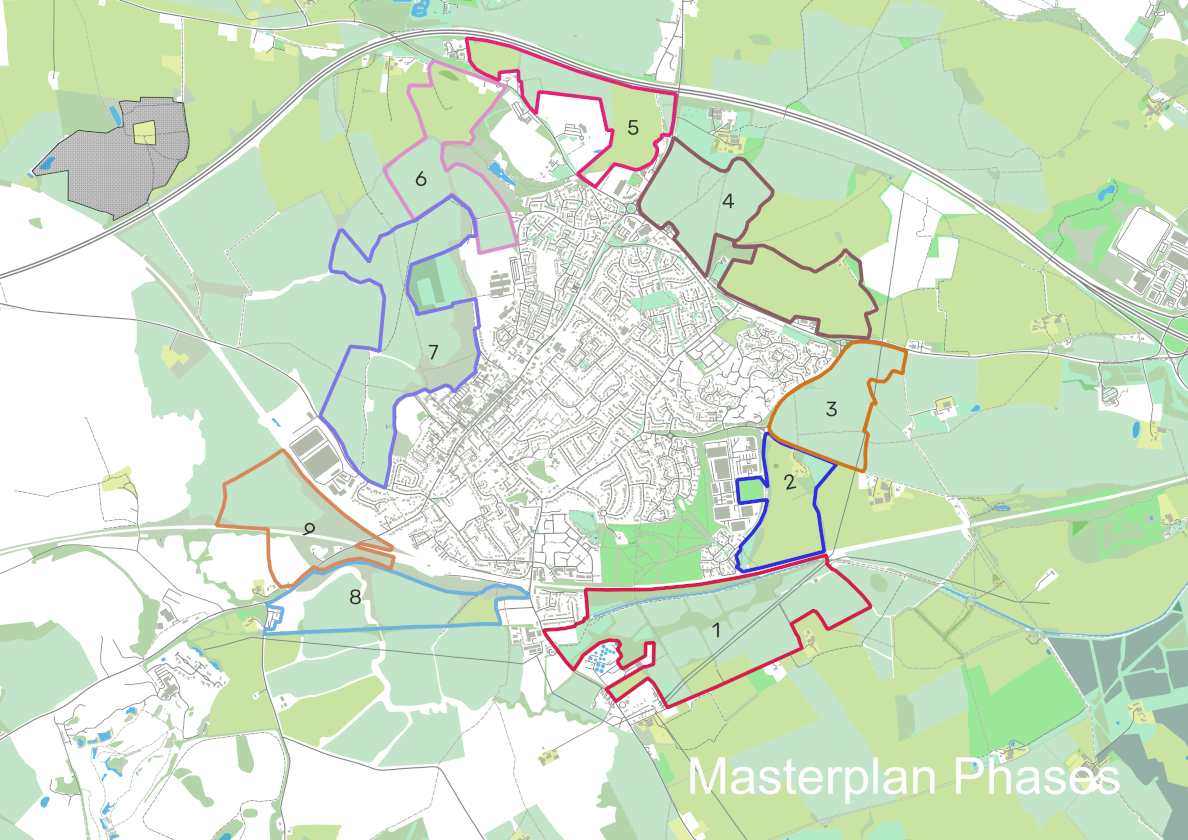
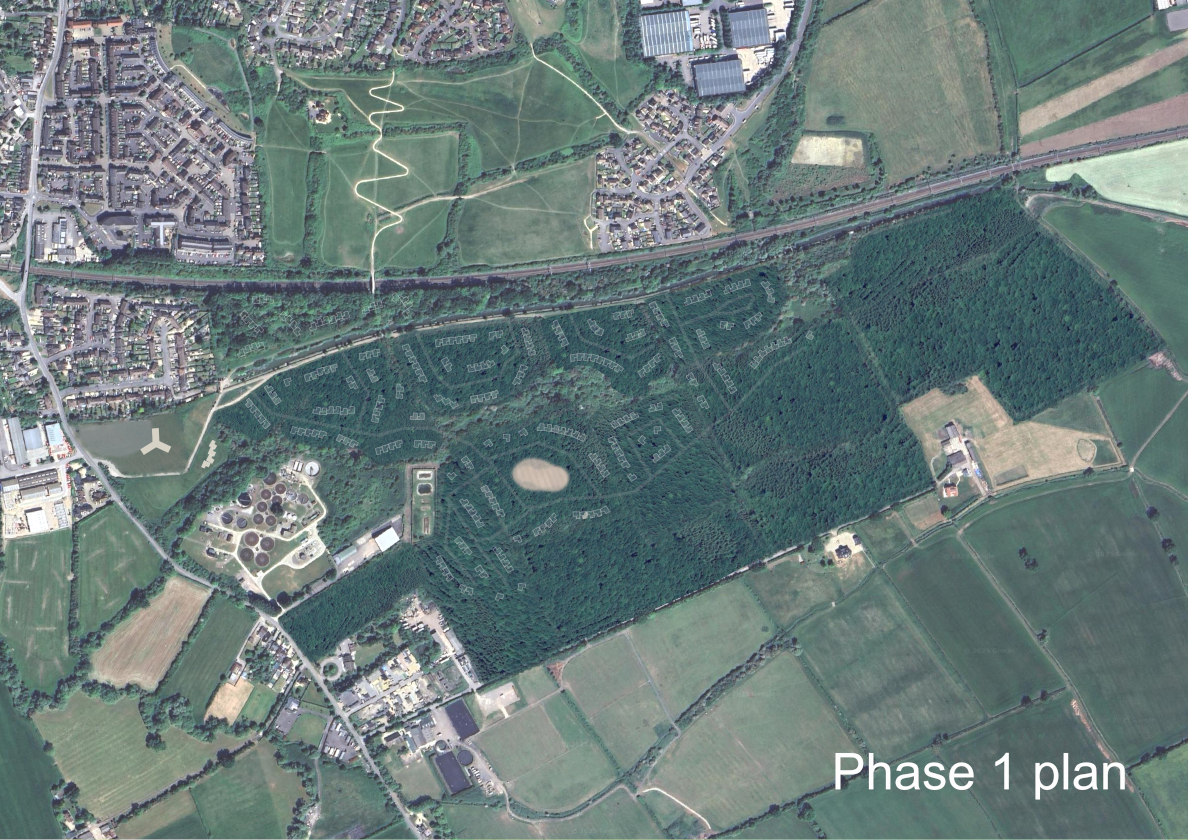
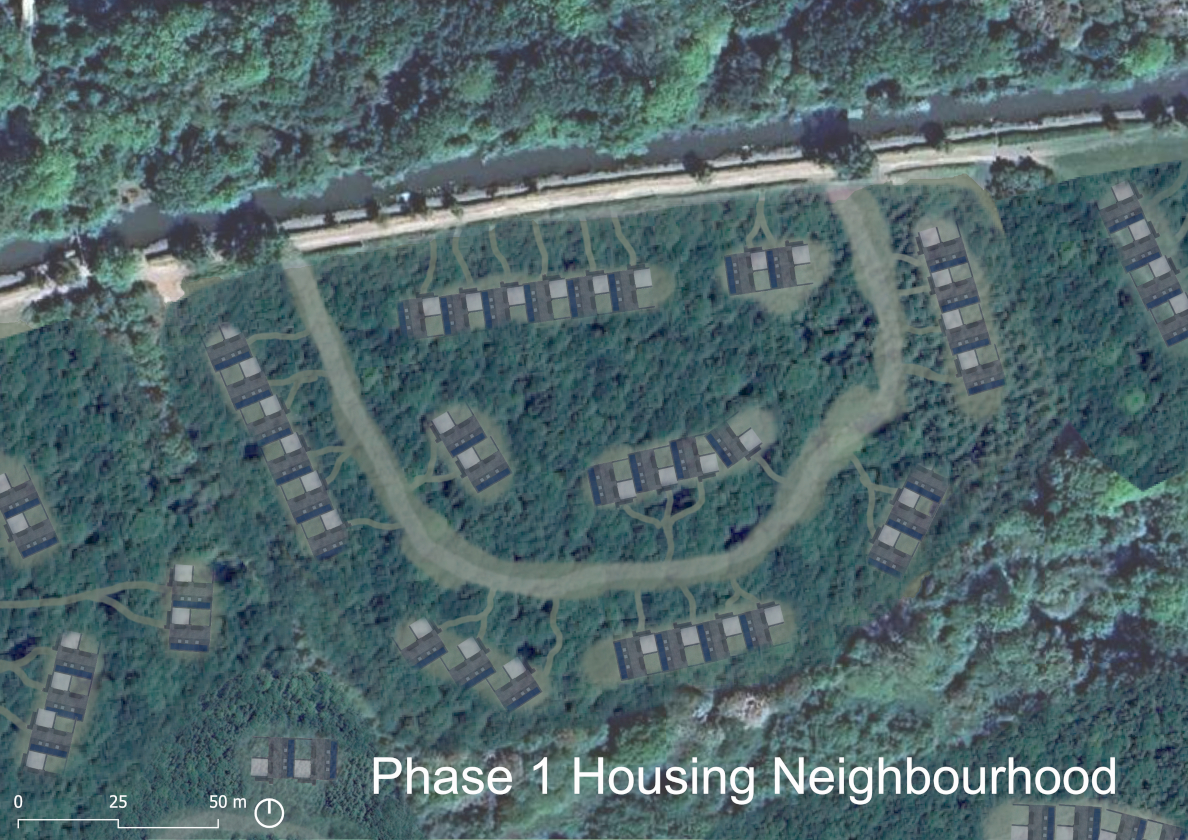
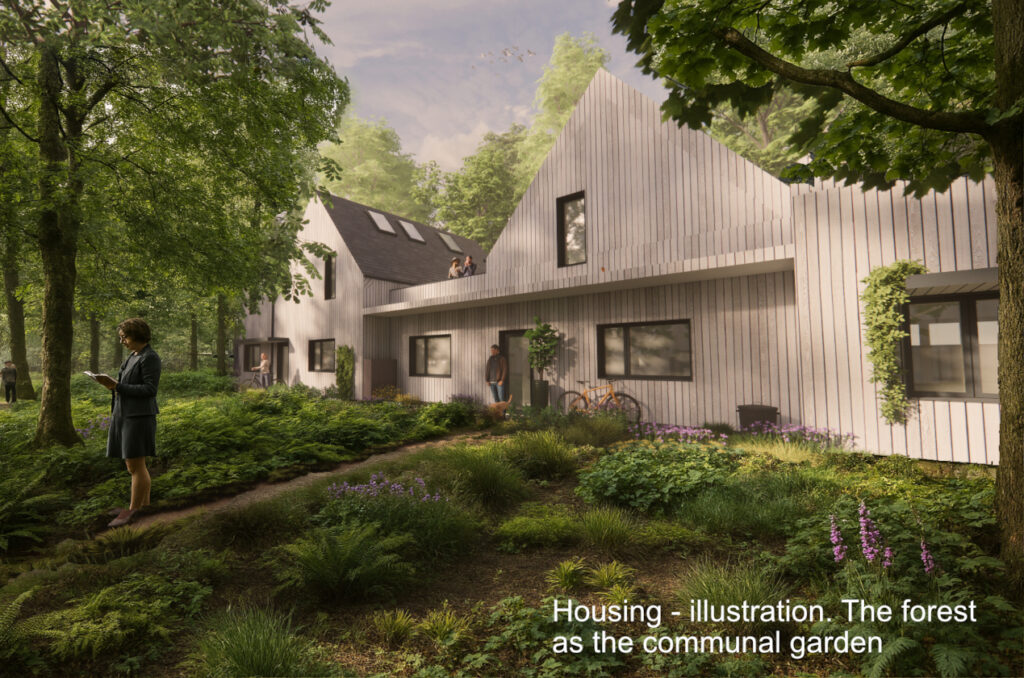
Distinct from traditional suburban sprawl or even the creation of new settlements, the “Green Halo” is a working forest surrounding the existing settlement with clusters of “forest housing” established within the forest. This prevents its continued outward expansion whilst tapping into and reinforcing the amenities that already exist in the town. In each phase of the project the housing will be supported by an access and amenities hub for the community. This helps support the town’s long term sustainable future.
Community building
A community is not sustainable if people cannot afford to live there, but this model seeks to provide affordable high quality housing with security of tenure through the Community Interest Company. The housing would be in clusters big enough to be a mini neighbourhood but small enough to ensure that people can connect with their neighbours – a proper community where no one is anonymous, whilst providing all the social benefits that go with a social neighbourhood. The housing types would cater for all types and sizes of household, and the tenancy rights would offer tenants the opportunity to upsize or downsize within their own neighbourhood as required.
* Wiltshire Council Draft Local Plan 2020 – 2038. (Wiltshire Council Local Plan 2015 – 26. required 1455 houses by 2026)